Wednesday, 11 April 2012

Portmanteau

A portmanteau is a new word that is made up by combining the sounds and meanings of two or more words. The word 'portmanteau' means suitcase in the English world.

The most common portmanteau words are: brunch (breakfast+lunch, introduced by the Punch magazine in 1896), smog (smoke+fog), jeggings (jeans+leggings) and Chinglish (Chinese + English).

Here are some more portmanteau words:

  • Internet (international+network)
  • Oxbridge (Oxford+Cambridge)
  • ginormous (gigiantic+enormous)
  • cocacolonisation (coca-cola+conolisation)
  • sitcom (situation+comedy)
  • mozilla (as in mozilla firefox) (mosaic-killer+godzilla)
  • Edexcel (educational+excellence)
  • FedEx (Federal+Express)
  • Microsoft (Microcomputer+software)
  • Insolation (Incoming+solar+radiation)
  • Beatles (beat+beetles)
  • because (by+cause)
  • goodbye (god+be+with+ye)

Tuesday, 3 April 2012

Lake Michigan

Listening to Matt Kearney's 'Closer to Love' (I don't watch Vampire Diaries!) makes me want to know more about Lake Michigan because it sounds like a nice place. Two months ago when I was too bored that I revised all states in the USA and their location, so Lake Michigan is not new to me.

Lake Michigan is one of the largest lakes in the USA, and is the 5th largest in the world in terms of surface area. Bounded by the U.S. states of WisconsinIllinoisIndiana, and Michigan, the lake is joined with its neighbouring Lake Huron.  It has a cul-de-sac formation, which means water is trapped in the lake for a very long time until it flows out of the basin through the Straits of Mackinac.


Famous cities around the lake include Chicago and Milwaukee, and the lake has a considerable tourist value as well. But other than that, there are nothing special I can find about the lake. So yeaa.

Monday, 2 April 2012

Falklands Conflict (a.k.a. Guerra de las Malvinas) explained


Today marks the 30th anniversary of the British-Argentina conflict over the Falkland Islands. I am fairly familiar with the name of the archipelago (that means a group of islands) as earlier this year I watched the Iron Lady in which Margaret Thatcher’s (starred Maryl Streep! One of my favourite actresses!) act on the war was mentioned. But other than that, I have no idea what actually happened.
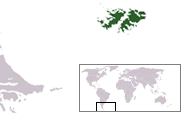
First, is to know where exactly the islands are. It’s in the Southern Atlantic Ocean, 350-ish miles off Argentina. And as you can see from the map below, there are two main islands, named East Falkland and West Falkland. The Falklands comprise of about 300 islands.


In the 19th century the Falkland Islands was colonised by the United Kingdom, which was fairly common because the UK at that time was quite powerful and had many colonies overseas. Then there were endless conflicts over the ownership of the islands between the UK and Argentina which I wouldn’t mention because it’s complicated. And in the world wars, the Falklands continued to be won over by the British army.

Problems emerged when the United Nations was founded in 1945, right after the end of WWII. Argentina saw its creation as an opportunity to pursue its claim of the Falklands. Negotiations between the two sides failed, so the Falklands remained under British rule.

At the beginning of the 1980s Argentina faced economic crisis, and the Argentinian government decided to invade the British-owned Falklands to regain its reputation. It started on 2nd April (today!) 1982. At first the UN was trying to persuade Argentina to have a negotiation with Britain but she refused. Living 8000 miles away, British Prime Minister Margaret Thatcher was determined to fight the Argentinian Special Forces. She said the 1,800 Falklanders were "of British tradition and stock. So the British sent their armies to the southern Atlantic.

The fight ended in June with British victory. Although it was brief, it was bitter (BBC) - 655 Argentine, 255 British servicemen and 3 Falkland Islanders sacrificed their lives during the war.

The result was that the Conservative party of the UK under the rule of Margaret Thatcher was much consolidated, and she herself has gained much respect as the first female British prime minister. On the other hand, Argentina gained nothing and her military government collapsed due to their defeat. Today, the Falklands are still under British rule, with English being the official language of the archipelago and inhibiting about 3000 people. But Argentina still claims the archipelago themselves. Doh.

And may I say that Thatcher’s decision to keep the Falklands under British control was quite a wise one – a massive oil reserve was discovered in 1998 near the Falklands which means that Britain’s energy security in the future may be ensured. Although not quite intended for this, well done Thatcher.

Tuesday, 13 March 2012

Why do we dream?


Dreams fascinate most of us. They are so random, creative, sometimes repetitive (recurring dreams). They bring us to an entirely different world, and most of the time we didn't know we were dreaming in our dreams. Here is some random information about dreaming:
  • The word 'dream' is related to the West Germanic draugmus, (meaning deception, illusion, or phantom) or from the Old Norse draugr (ghost, apparition) or the Sanskrit druh (seek to harm or injure) 
  • Most dreams occur during the REM (rapid eye movement) stage during our sleep, where brain activity is high
  • On average, a person has at least 4-6 dreams per night. In one year you have about 1500 dreams.
  • If you don't agree with the previous point and think that sometimes you didn't dream at all, that is just because you don't remember them. In fact, you forget 90% of your dream.
  • The longest dream occur in the morning. It lasts about 40 minutes and we tend to remember this dream.
  • Your eyes move with you when you dream. For example, in your dream you're hit by a car from the right, at that moment your eyeballs will suddenly turned right as well (that moment when you realise the car is there)
  • People who become blind after birth also dream
There are two possible explanations for why we dream. The first one is the unexciting Biological explanation, which states that we dream because of the random firings of our neurons in our brain.

The second one comes from the Psychodynamic Approach, which is developed by Sigmund Freud, who believed that dreams are the "Royal Road to the Unconscious", i.e. dreams reveal the unconscious side of our mind.
Freud went on to suggest that there are two types of content in our dreams. Manifest content refers to what we dream about (basically the story of our dream) whereas latent content refers to the underlying meaning of our dream.
Freud argued that the symbols of the latent content of dreams are different to everyone. Also he said that not all dreams have this kind of underlying meaning, as he said 'Sometimes a cigar is just a cigar.';So if you dream of a dog chasing after you, it might just be because you were chased by a dog recently.\

Dreams are an absolutely fascinating subject to me. More on dreams in later posts!

Friday, 9 March 2012

Solar Storm - another natural disaster we're not prepared for

Yesterday saw a wave of fear of solar storm over the Internet. Never heard of that, I did some research on it. Due to my limited knowledge in science, my explanation will be kept to a very simplistic form.


What is a solar storm?
A solar storm, a.k.a. geomagnetic storm, is a natural occurrence caused by the high-energy particles released by the Sun to the Earth. These particles are responsible for making the beautiful polar lights a.k.a. Aurora visible to us in areas of low latitudes. However these particles can also be a natural disaster as it could disrupt technology.

If you click the photo below you will be directed to a link of the BBC website where it explains the cause of the storm in more details, which I wouldn’t attempt to simplify the explanation.


How does the storm affect you?
The storm may knock out power and knock satellites out of orbit, which could destroy world communications and navigation systems, etc.  Yes, that means you can’t go to Facebook/Twitter/Tumblr, there’s no telly to watch, and you can’t text your friends. Basically you are separated from the world outside your current geographical location. The only ones you can talk to are your family or neighbours. Woohoo!
Another problem with solar storms is that your body will absorb a huge amount of radiation (X-rays) for long periods of time lead to lethal illnesses. 

Have any solar storms ever happened before?
Yes. There have been numerous solar storms in history, with the earliest recorded major storm dated back to the 18th century.
An example of this would be the solar storm of 1989, which caused disruptions in electric grids and computer systems. In Quebec, Canada, the power cut lasted for 9 hours! Oh dear.
Given that nowadays we are so much more reliant on energy, you can imagine that a solar storm can lead to an even more catastrophic consequence.

Why are solar storms a global concern recently?
There’s something called the solar cycle in which the Sun goes high and low activity and the cycle repeats every 11 years. Given that last time was 2003, it is expected to peak in 2013 or 2014, which means we will be expecting more solar flares over the next few years..

What’s ‘good’ about the storm?
As mentioned before, these particles allow us to see the beautiful polar lights. With more intense solar storms, these Auroras can be seen in even more places such as northern USA or northern UK (now gutted that I’m living in the South).

Are any people actually preparing for the solar storm?
YES. There were many people in the world taking it seriously. In fact, there is an interesting programme on National Geographic called ‘Doomsday Preppers’ which filmed how people in the US are preparing for the long-lasting power cutsHere is a video I *currently* find hilarious and over-reacting (this woman is NOT preparing for solar storms though, check the website to see if anyone is preparing for the storm!)


Sounds crazy at the moment, but who knows if these people would be the ultimate survivors if the storm really struck! (Touchwood though.)

Lastly, for the solar storm that happened yesterday, here's a BBC article on it: http://www.bbc.co.uk/news/science-environment-17295337
------------------------------------------------------------

Once again, the solar storm reminds me of how vulnerable human being could be. No matter how ‘developed’ or ‘civilised’ we are, we are still extremely dependent on technology which could have been easily destroyed by natural disasters. 

When compared to the nature, we are nothing.


Thursday, 1 March 2012

Diet habits

About 5% of the UK population consider themselves to be vegetarian, according to the National Diet and Nutrition Survey. That's about 3 million people, with women more likely to call themselves vegetarian than men. The figure for vegans is smaller - consumer surveys suggest they make up about 1% of the UK population.


Vegetarianism - a diet  that includes only cereal products, nuts, seeds, and fruit and vegetables, and may or may not include the use of dairy products and eggs. Vegetarians do not eat meat, poultry, fish, shellfish or foods containing meat products.
Veganism - will not eat dairy products, eggs or any other food derived from animals.


Ovo vegetarianism - a type of vegetarian diet which allows the consumption of eggs


Lacto vegetarianis - a vegetarian diet which includes dairy products such as milkcheeseyogurtbuttercream, and kefir, but excludes eggs.
Probably the most common type in the UK are lacto-ovo vegetarians, who include eggs and dairy products in their diet. Lacto-vegetarians eat dairy products but not eggs.

Pescetarianism those who abstain from eating all meat and animal flesh with the exception of seafood. Pescetarians often believe that moderate consumption of fish or fish oils, which are high in Omega-3 fatty acids, is necessary for optimum health. 

**Additional information

Paleolithic diet
  • a.k.a. paleo diet, the caveman dietStone Age diet and hunter-gatherer diet
  • A modern nutritional plan based on the presumed ancient diet of wild plants and animals that various hominid species habitually consumed during the Paleolithic era—a period of about 2.5 million years duration that ended around 10,000 years ago with the development of agriculture. 
  • The "contemporary" Paleolithic diet consists mainly of fish, grass-fed pasture raised meats, vegetables, fruit, roots, and nuts, and excludes grains, legumesdairy products, salt, refined sugar, and processed oils.

Source: BBC, Wikipedia and About.com

Tuesday, 28 February 2012

Latin abbreviations - e.g., i.e., a.m., etc!

Have you ever wondered what do abbreviations such as e.g./i.e./a.m. stand for?

These abbreviations that we always use are actually Latin. Some of the most commonly used ones are:
  • e.g. (exempli gratia) - for the sake of example; we usually read this as 'for example'
  • i.e.  (id est) - 'id' means 'that' and 'est' means 'is'. Yes you're right. It means 'that is' (meaning ''which means'). Some people always confuse this with e.g., which has a totally different meaning.
  • etc. (et cetera) - 'et' means 'and' and 'cetera' means 'the rest'. We know how it is used.....and we normally read this as 'exactra'
  • a.m. (ante meridiem) - 'ante' means 'before' and 'meridiem' means 'midday', this is why we call 9 o'clock in the morning 9:00a.m.
  • p.m.  (post meridiem) - same as the previous one, but 'post' here means 'after' apparently
  • et al. (et alii) - 'et' means 'and' and 'alii' means 'others'. This is similar to etc., but this is used for a list of names. For example when I study psychology we always have to use this word as a research was done by many researchers but they will only show the leading researcher when crediting them, for example Hofling et al.
  • Q.E.D. (quod erat demonstrandum) - if you have studied mathematics you probably have come across this abbreviation which means 'what was to be demonstrated'
Currently I can only think of these most common ones. If there are any other common Latin abbreviations that we always come across please feel free to comment below.

Although Latin has already been classified as a dead language, I have always been quite enthusiastic about Latin ever since I knew its existence. In fact, many of our English words indirectly come from Latin words. Here are some extra Latin phrases that I like (not abbreviations):

  • Carpe diem - seize the day (watch the film 'Dead Poets Society' if you haven't)
  • Cogito ergo sum - I think therefore I am
  • Audere est facere - To dare is to do
So when these words/phrases have their English form, why Latin? Nothing, it just sounds cool. I used to remember more Latin words than I do now....it's just simply an enjoyment of learning something others don't.

Friday, 24 February 2012

Twin Paradox

I've discovered an animation which explains what is the Twin Paradox very thoroughly. The video is 5 minutes long but I swear it is not boring. You will get it even if you are not a science-y person. Enjoy!


Wednesday, 22 February 2012

What is Pancake Day?

Yesterday was Pancake Day and we had some tossing fun at home!


Pancake Day, a.k.a. Shrove Tuesday, is the last day before the period which Christians call Lent. Lent starts on Ash Wednesday (which is today), which is 40 days before Easter. During these 40 days Christians are supposed to give things up (like, to 'improve' their lifestyle) and to fast. It is traditional on this day to have pancakes, as pancakes are made up of fat, butter and eggs, which are traditionally forbidden during Lent. So Pancake Day is the last chance to indulge ourselves!

The reason why it is also called Shrove Tuesday is that the word 'shrive' means 'confess'. During the middle ages, people confess their sins on Shrove Tuesday so that they were forgiven before Lent began.

It is a day celebrated prominently in English-speaking countries so before I came to Macau, I actually didn't know there was a pancake day! The day is also named differently in different countries:


  • UK, Ireland, Australia - Shrove Tuesday, Pancake Day
  • Brazil - Fat Tuesday (which is also the final day of Brazilian Carnival)
  • USA and France - Mardi Gras (which means Fat Tuesday as well)
  • Iceland - Bursting Day


Pancake races are also held nationwide in the UK to celebrate this day. The tradition is originated when a housewife from Olney was so busy making pancakes that she forgot the time until she heard the church bells ringing for the service. She raced out of the house to church while still carrying her frying pan and pancake.

Image from Gazette Live 

Did you have pancakes yesterday? What did you have it with?

Friday, 17 February 2012

Where/what is Macau?

I want to start my first post with something I can relate myself more to. So the question is - where is, or even (which I wouldn't blame), what on earth is Macau?

You probably would not have heard of this place, but in fact, normally when you scroll down the list where you're asked to select your country of origin, the name 'Macau' appears. I haven't figured out how to explain things in the easiest way. Bullet points is going to be my first attempt.

Things you need to know about Macau:

  • Obviously it's a place, but not a country
  • It's part of China but not exactly part of China, the next point explains this
  • The official name for Macau is Macau SAR (Special Administrative Region);  it is *somehow* under the rule of China - it has its own sets of rules, but then somehow it's controlled by China's central government. They call it 'One country, two systems'.
  • It's next to Hong Kong (which is also an SAR)!
  • Macau is extremely small. You cannot see its physical continent on a world map. Hong Kong, which is also small, is 38 times larger than Macau 
  • Its currency is Patacas (MOP)
  • Reason why Macau is an SAR: Macau has been colonised by Portugal since 1557, until its handover to China in 1999
  • People born before 1999 hold a Portuguese passport - which means many people in Macau are actually EU citizens, although many of them haven't even been to Europe
  • Language spoken: Cantonese (which is a dialogue of Chinese)
  • What Macau is famous for - its gambling industry, which started to flourish since mid-2000s.
  • Add a bit of personal touch: people in Macau don't normally tell foreigners they live in China! We are from Macau, but most people normally do accept that they are Chinese. When some want to be specific they call themselves Macanese, but this is rare
  • Good old Wikipedia explains its geographical location as well as size: 

Some more interesting facts about Macau....

  • Macau has one of the world's lowest unemployment rates
  • According to CIA factbook, Macau has the highest life expectancy in the world
  • Macau is the most densely populated region in the world, with a density of over 47,000 per km sq
  • It is also the world's second largest gambling areas in the world, second to Las Vegas
There are so many things I can tell about Macau obviously because this is the place I've lived for 17 years. But if anything you want to know more, or if there are any mistakes or suspicions among the things I've written, please feel free to leave a comment below.

And please also tell me whether this bullet point method works or not? And do you think it should be even shorter?

It is so important to know at least something.

I am the kind of person who needs to know (almost) everything. I just want to know. It's not because that could make me sound more smart in front of others or something. Knowing more means that I am more familiar to the world I am living in. Just a couple of days ago I realised I didn't even know where Oregon was. I immediately googled a map of the United States and within two days, I memorised all the states as well as their location. Sometimes I feel ashamed of myself for not knowing something, for example, now I still haven't figured out how did the oil spill in the Gulf of Mexico happened.

My strange desire to know everything perhaps comes from my father, who is like a living encyclopedia himself. Not only does he speak many languages, whenever you gave him a topic, literally anything, he could have something to tell you (not anything quite mathematical though - just like me - we are both genuine maths haters).

It is quite shocking to witness how many people of our generation do not know what is going on. Many people nowadays have locked themselves up in their own social circle, carrying the horrid 'don't care' attitude. The Internet is here, for the purpose of sharing information, but thanks to Facebook, such a limited amount of knowledge is actually shared.

Yet don't take me wrong for boasting myself as an extremely knowledgeable person. Even though I occasionally find myself in a position where I know more about than my peers do, there is still a whole lot of things that are unknown to me (which I want to know!!!). And I do understand why most people cba to research something they don't understand. First, news articles are something monotonous and long; second, sometimes it gets so complicated so we give up; third, you're in the middle course of the news and you don't know what have previously happened; fourth, you just don't know where to start! But for those who think that they don't have to know because 'it doesn't have anything to do with me', I just have to feel sorry for them and hope they could leave their Facebook or Twitter or whatever for a while and come and have a look.

It sounds like things I am going to include in this blog will be just news. But I actually want to cover everything. From Tutankhamun to Kim Jong Il, from relatively to the Academy Awards (sorry they are just so random!) - literally ANYTHING we want to know. Einstein once said that if you can't explain something simply, then you don't understand it thoroughly. So here I challenge myself to explain these things in the simplest way and everything that is explained can be understood within 5 minutes.

So here I am, aim of this blog:

  • To motivate myself to learn more about something that I've been wanting to know
  • To help people who struggle to know something that they want to know
  • To try and make something boring and tedious more interesting and understandable
  • To create a informative platform for anyone who can explain something quite simply
  • To let us all realise what the world is like and what is going on!
Lastly, if there is anything you find difficult to understand, send me a message or comment below. I will try my very best to create a post for it ASAP!